Tag: covid

  • A new approach to work after a life-altering event

    A new approach to work after a life-altering event

    Your life looks more different right now than it ever has.

    Depending on the nature of your work, you are either run ragged trying to keep your business afloat, or you’ve had some time to slow down, take a step back and see life, your life, from a different perspective.

    Our patterns of behavior are ingrained in each one of us; what we do for work is often at the core of our identity. We wear 10-hour work days like a badge of honour; it signifies good work ethic—that we are getting somewhere. We are conditioned to drive to our place of work, sign up our kids for every available sport and artistic endeavor, all the while, stay fit, eat healthy, take care of ourselves and find quality time with loved ones.

    We’ve had some time to step off this crazy track (some of us are now watching the rats run by). We’ve been on a road that is near impossible to see because we are always traveling too fast upon it.

    It feels like a good time to open the mind to different perspectives and shared wisdoms, and ask the question, “Have I been working smart, or the only way I know how?”

    In a recent interview with Tim Ferriss, Michael Lewis asks, “Am I only here to pay my bills? Or are we here to get more out of life?”

    Lewis tells the story of his young self working for Salomon Brothers. After he wrote an op-ed for The Wall Street Journal about investment bankers being overpaid, he got into big trouble with his boss. But, he was also one of the highest revenue generators at the firm at the time, and therefore, un-fireable.

    Listening to people who are inclined to speak their truth gets one asking, “What is my truth?” While Lewis is more than ambitious, and admits he’s competitive, he says he doesn’t accept money as an accurate measure of ambition or success. “I’m not trying to get a lot of [one] thing. If I’m trying to maximize anything, it’s a feeling. [I want to say] ‘that is a great piece of work.’” It’s a great interview and worth a listen. 

    Working hard versus working smart is something we’ve all heard before. Medium contributor, Amanda Warton Jenkins reveals in her post “Don’t Work Harder, or Smarter; commit to these 3 things and watch your life improve” that after her reading of Brendon Burchard’s book High Performance Habits, that “the highest performers don’t grind and hustle like me.” She admits, [her] “ladder was usually against the wrong building.” Meaning, she realized that her “why” for achieving half the things she was working hard to achieve were for the wrong reasons. She states, “Many of my goals were only there because achieving them was about how I looked to others. Achieving them made me look successful, normal, important. But none of them had anything to do with who I really wanted to be.”

    COVID isolation has been a good time to reflect for some business owners and entrepreneurs. It’s a great time to answer some unaddressed and hard questions, like:

    Do I want to grow my business for the right reasons? Does your growth strategy make sense for your business? Or are you positioned for growth because it’s what you think you should do?

    What have I noticed about my business during the pandemic that I have never noticed before now? Is less overhead serving me well? A smaller team?

    How have my customer’s expectations changed? How can I keep this new mindset going?

    Can my business gain insight into new ways of operating? A new process?

    Zat Rana, an online writer who describes himself as “playing at the intersection of philosophy, science and art”, takes the words of philosophers and turns them into modern day messages, applicable to our daily lives. In a more recent article, he says of Nietzsche’s philosophy to not think of knowledge as being separate from power.  He explains, “Think of your body as an expression of truth. More than the warrior or the philosopher, this is why Nietzsche was especially drawn to the archetype of the artist – he/she who creates what they are.”

    There seems like no better time than now to recreate who we are, reinvent aspects of our businesses and question our approach to work.

    Author: ChamberPlan.ca
    Read the original version of this article.

  • Innovative ways businesses keep going during COVID-19

    Innovative ways businesses keep going during COVID-19

    As the saying goes, when life gives you lemons, make lemonade. Montreal distiller Paul Cirka decided to take his own spin on this old adage when life – or more accurately, his supplier – gave him corn. Instead of turning corn into gin, he made hand sanitizer.

    Cirka Distilleries is one of many businesses finding innovative ways to keep the doors open during the COVID-19 pandemic. It’s not an easy task. As the federal and provincial governments take measures to combat the virus, more than a million Canadians lost their jobs in March and by mid-April more than five million people had applied for the Canada Emergency Response Benefit.

    Over the last month, many businesses have been declared non-essential. Many have closed their doors, hopefully temporarily, as they ride out the pandemic. Others have turned to alternative ways to carry on. Restaurants are doing takeout and delivery, for example, and fitness facilities and yoga studios are putting classes online.

    Some businesses have become even more innovative. Fortunately for companies like Cirka Distilleries, COVID-weary Canadians need a drink more than ever and businesses that make and sell alcohol continue to operate. Cirka saw a need even greater than gin and vodka, however, and using a recipe approved by the World Health Organization, the business has joined distilleries around the world to produce much-needed hand sanitizer. Since March, Cirka’s employees have been working around the clock to develop the antiseptic, which requires a much higher form of alcohol than the usual 40 proof Cirka uses to make its vodka and gin.

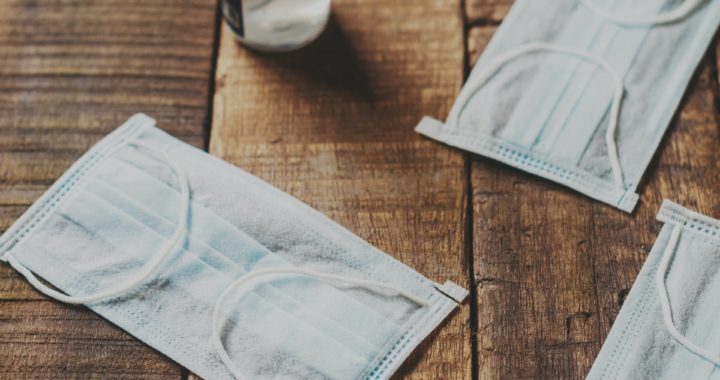
    Other businesses are also straying from “business as usual”. Bauer Hockey, one of North America’s top producers of hockey equipment, has changed its focus to make another product currently in high demand: masks. Bauer is using hockey visor materials to manufacture full medical face shields, which are meant to protect the wearer from being infected by respiratory droplets that carry the virus. Organizations can request a minimum of 100 face shields directly through Bauer’s website.

    Bauer’s venture into medical face masks is a welcome contribution in a time when frontline workers are in dire need of personal protective equipment…and when employees of businesses deemed non-essential would otherwise be unemployed. The switch from hockey gear to hospital gear is keeping 20 people working in Quebec and another 12 working in New York.

    Peregrine Retail Design Manufacturing’s in Burnaby normally creates elegant front counter designs for high end clients including Lululemon, CIBC and Starbucks. But when many of its clients were forced to temporarily shut their (undoubtedly fancy) doors, work came to a halt and Peregrine had to lay off 30 per cent of its 85 person staff. Seeing a need in the retail sector determined to still be essential – grocery stores, pet stores and (as we determined earlier) liquor stores, Peregrine quickly turned its sights to manufacturing a product slightly less high end but ultimately more critical in keeping retail workers safe – plexiglass shields.

    There’s no word yet on when life will get back to normal. But while the future remains uncertain for many small businesses in this most unprecedented time, one thing we can likely count on is that more business owners will embrace innovation, and find new ways to stay afloat, meet a need and keep their workers working.

    Author: ChamberPlan.ca

    Read the original version of this article.

  • Keeping your business current during COVID-19: Ted Kouri of Edmonton’s Incite shares his pandemic plan

    Keeping your business current during COVID-19: Ted Kouri of Edmonton’s Incite shares his pandemic plan

    Many of us are stewing, stressing, wondering what we are supposed to be doing right now, other than swimming for our lives. Do I need a new business strategy? Should I plan for a major pivot—think up new ways to deliver my services or products? Should I be shutting my doors?

    “Business as usual” seems a proverb of a long-time past—most business owners are navigating a terrain as foreign as the moon right now. “This isn’t like any other time we have ever experienced,” says Ted Kouri of Incite, an Edmonton-based strategy firm with national reach that helps small businesses grow into new markets and build brand loyalty.
    “It feels different than H1N1 or any market crash that has come before because it hit us so fast,” says Ted. “COVID-19 doesn’t discriminate geography or industry, we are all affected, business-wise and personally.”
    Most people agree, this is not the time to be ‘making the sale.’ We asked Ted how he is keeping his business current and an asset to others, and personally navigating this time of uncertainty. Here is what he shared:
    1. Keep your clan in the loop.
    Internal staff communication has looked like the following over the past weeks: Layoffs, down-sizing, uncertainty, and more layoffs. No question, there are lots of scared people. Ted suggests keep all your staff in the loop, whether they are laid off or not. “If your whole team is kept up to date, messaging regarding your business can stay consistent and transparent,” says Ted. “Don’t pretend it’s not difficult when communicating with your team, but don’t let fear rule the day. Be upfront, but positive.”
    2. Repackage your services. Never has “adapt or die” been more true in business, however, according to Ted, “It’s a mistake to totally abandon your strengths right now. Instead, get creative about how to bring your new ideas or service segments to market,” he explains.

    “There might be new needs your clients have never had before.”

    Ted also advises, make short term pivots that have long-term value. “Don’t give your services or products away for free, but repackage them. A different version of your core services might be a four-week offering vs. a five-month plan.” For restaurants and grocery stores, it’s curb-side pick-up. For the beauty industry, it’s using training technologies such as YouCam A.R.T. to stay connected with clients and have them “try-on” new products. Fashion and retail industries are using new app, Streetify to give clientele a virtual shopping experience.
    3. Make a game plan. “Back to normal” seems elusive right now. No one knows when that will be; however, having a game plan—a vision for what “later” could look like—can put the mind at ease.
    “Businesses need to think about market share that could be gained when businesses are up and running again,” explains Ted. For Incite, 3, 6, and 9-month contingency plans have given them a path forward, some options when it feels like there are none. “A contingency plan doesn’t have to be complicated,” says Ted. “Just a one-pager laying out some avenues to take once we have past certain gates.”
    Ted believes brands that go dark—those who don’t have external communication while they are temporarily closed—will have a harder time to hit the ground running when it’s time. “Decide how you can maintain relevance with your clients and stakeholders right now, and make an authentic connection.”

    “The small businesses that choose to show up for their clients now will do better in the long term.”

    4. Decide your personal mindset. “One of my favourite business pieces is Dan Sullivan’s ‘Scary Times Success Manual: How to be a leader when times get tough.’” How we decide to show up right now matters. A lot. “People admire those who can stay positive, shed light or solution on a situation.

    “There has been no better time to show personal leadership and be of value to others than now.”

    It may be hard to believe at the moment, but there’s a chance that this crazy time is an opportunity for businesses to get better at what they do. “What’s important is to focus on what is not different,” says Ted. When we are forced to downsize, get creative, save money in order to survive, we quickly see the holes in the way we operate. “There is opportunity that will come from this time. The trick will be to have your running shoes tied on the start line when the sun comes out, and all this is over.”