
Category: Uncategorized

  • Time to reinvent your business?

    Time to reinvent your business?

    It’s been said “never waste a good crisis.”  Most business owners who have been enduring the unexpected impacts of the COVID-19 pandemic would probably agree:  as far as crises go, this has been a pretty good one.

    “Good” may not be accurate. For some, words like “devastating”, “ruinous” or “bankrupting” might be better descriptors.  To be sure, the pandemic and its economic consequences didn’t bring much good to anyone – unless you were in the toilet paper or hand sanitizer business – but what it did bring was the opportunity (and for many, ample free time) to take a good look inward and reflect — on our lives, our careers and our businesses.

    If you run a business, it’s certainly the right time to take a second look at what you’ve been doing and decide if you can – or should – keep doing it.  Whether your business is currently open, getting ready to re-open or shut down for good, some reinvention may be in order in this new, post-pandemic world.

    To get those thoughts rolling, here are a few book suggestions:

    The Optimization Edge: Reinventing Decision Making to Maximize your Company’s Assets – Steve Sashihara

    Author Sashihara takes a look at why, on a level playing field, some companies downsize while others keep growing. The book talks about how to approach your decision making in a way that optimizes your assets and gets the most value from your company – under any conditions. Sashihara presents step-by-step best practices and tools to help you stay ahead of the competition, even during a downturn.

    Reinventing the Organization: How Companies can Deliver Radically Greater Value in Fast-Changing Markets – Arthur Yeung, David Ulrich

    Markets change quickly. To keep pace and stay competitive, businesses need to change at least as rapidly. Yeung and Ulrich use their in-depth research into some of the world’s most successful organizations – including Amazon, Facebook and Google – to help readers build an organization that responds to changing market opportunities with both speed and scale. The book includes a six-step framework to help with all decisions leaders need to make in these shaky times.

    Business Model Renewal:  How to Grow and Prosper by Defying Best Practices and Reinventing your Strategy – Linda Gorchels

    When the global market is constantly changing, one-size fits all solutions don’t work. Author Gorchels argues that these days, even best practices can go out the window along with the phrases, “business as usual” and “tried and true”.  The book is not just about renewing your business model, it’s about reinventing it – by re-evaluating your methods, rethinking your strategies and broadening your perspectives. There is no crystal ball, but there is a way you can be ready for (practically) anything.

    What Happens Now: Reinvent Yourself as a Leader Before Your Business Outruns You – John Hillen and Mark Nevins

    What happens when your organization changes faster than you do?  Many leaders change everything around them – hire new staff or put in new reporting structures, for example, while others do things the same way they’ve always done them, only more so.  What Happens Now is the leaders’ guide to changing their own behaviours and skills so they can successfully drive the new ship. The authors share stories from dozens of leaders who have faced the need to change or (figuratively) die, and have come out the other side a stronger person, a superior leader and with the tools they need to adapt – and lead – in ever-evolving situations.

    Good Leaders Ask Great Questions – Your Foundation for Successful Leadership – John C. Maxwell

    John C. Maxwell is an acclaimed leadership authority and has acquired much of his knowledge on the subject by asking questions. He’s used what he’s learned to inspire millions of people through books including Leadership 101, What Every Leader Needs to Know and No Limits Blow Your Capacity. In this book, his readers get to ask their questions. With 70 plus questions answered, the book will show you how to be a better leader and how to ask the questions that will keep you at the top of your game – even in a crisis.

    Author: ChamberPlan.ca

    Read the original version of this article.

  • Insights on marketing during and after a pandemic

    Insights on marketing during and after a pandemic

    In a post-pandemic world, will our customers continue to be brand discerning, or will they turn a blind eye?

    We’re hardly there, yet—a post-pandemic world; however, the economy is slowly coming back as cities re-open businesses and people emerge bleary-eyed from three-or-so months of isolation.

    Isolation forced us all into somewhat of a consumerism lapse—No one was leaving shopping malls with a spree of purchases, splurging on travel or indulging in personal upkeep, browsing store fronts, or even grocery aisles, for that matter. It was more of a get-in-and-get-out kind of scenario—get the necessities and sprint for home. Heck, few of us were even gassing up.

    And business had to adopt a new kind of etiquette—few were doing anything more than engaging with customers, or selling products at a discount—upselling was in bad taste (and might still be).

    With this “blip” in consumerism, Jeff Beer of Newscred Insights questions, will COVID-19 will make us brand blind? “The longer it goes on, the more people’s minds are going to be wiped of brand preference in many instances. That specific brand of toothpaste is going to matter to me less than just toothpaste.”

    Though the usual marketing pulse has weakened, what happens when it comes back? When advertising is up and running again?

    What will smart businesses be doing differently?

    Find new ways to engage

    Some of businesses got lucky and flourished (bike stores), and have been lucky to have a high close rate based on supply and demand (bike stores). But, has some time away from the world of consumerism, given us pause? Does the future of consumerism look different?

    Steve Stoute, founder and CEO of Translation has done branding work for major sports leagues and believes, “No matter what the Knicks’ record was before the pandemic, or how you felt about the team before the pandemic, you’re going to be as excited as ever when they hit that court again. The momentum and engagement of that excitement is an opportunity for marketers like myself.”

    Whether Stoute helps the franchise find new ways to engage with customers, or increases the merchandise available to Knicks’ lovers, he is likely right—there will be a surge when everyone can get back to watching their favourite sports, live, again.

    Consider new ways of executing on “face-to-face”

    It’s also believed that travel for work will look a lot different—brands that sent their people for a face-to-face meeting, or traveled to location to market their products or services—some of that will go away, for the sake of profit, and because it just makes sense. Margaret Johnson, partner and Chief Creative Officer for Goodby Silverstein and represents big brands, such as Doritos, Pepsi and BMW, says of producing advertisements, “I can’t even imagine a situation now where you’d spend the money it takes to send eight people to shoot out of the country. You can just as easily see takes online. I think it’s going to have a big effect not just on production, on business in general, to be honest.”

    Observe New Consumer Behaviours

    Early in 2019, before our world was turned upside down by a worldwide pandemic, Forbes contributor, Michael Stone, said “Retail is actually expanding, consumers are shopping and sales are up. Where, when and how consumers buy goods is shifting …”

    Stone was perhaps ahead of his time in predicting where brands will have to go—both outside and inside the retail industry. The “experience” they deliver, that is how a consumer is to discover a brand and how that brand catches on—might look different.

    Stone states, “Brands will continue to look for ways to ‘pull’ consumers into brand rather than ‘pushing’ the brand at them.” The rise of Augmented Reality is also to be expected, making it easier for consumers to engage with a product and decide whether or not to buy. Stone gives examples like IKEA and Wayfair, two companies with apps “that allow consumers to see actual furniture to scale in their own homes.”

    There is also market share to consider. The pandemic has been devastating for some businesses, so much that they have had to close their doors. Digital brands dipping into the market share will rise. Stone gives examples like Caspar taking a dip into Tempurpedic and Serta Simmons market share; Harry’s Shave Club taking a bite out of Gillette and Schick’s.

    It could be argued that any online brand has a chance to reinvent itself and gain market share—consumers are spending more time at home, and more time than ever on their screens.

    Collect the Data

    For those businesses that are essential services and have remained open through the pandemic, how are consumer behaviours changed? How do those same consumers engage your business, now? R.J. Taylor, founder of Pattern89, an artificial intelligence-based software company, says “No matter where your business falls in this new age, data can help you understand your audience’s changing habits . Take this time to slow down…and really dig into what your customers are doing.”

    For grocers, they certainly could look at their data and see that consumer buying habits changed during the pandemic. What of these habits might continue when all goes back to normal? What have customers discovered about the way they have bought their groceries over the past three months that they might adopt on an ongoing basis—for example, mass buying certain items, or planning their meals better so that they are minimizing trips to the grocery store.

    Is there a change in the average number on your work orders and invoices? Why is that? What has driven your customer base to make different decisions? When you are in touch with your own data, “you don’t need to guess what your audience is being attracted to—you can know with certainty,” says Taylor.

    And perhaps that is what brands will be expected to do down the line—work hard to create a sense of certainty when it feels like there is very little.

    Author: ChamberPlan.ca

    Read the original version of this article.

  • What the Canada-US-Mexico Free Trade Agreement means to you & your business

    What the Canada-US-Mexico Free Trade Agreement means to you & your business

    Nearly three years in the making, the revamped NAFTA agreement came into effect on Canada Day, July 1, 2020.

    Our federal government calls it the Canada-United States-Mexico Free Trade Agreement (CUSMA), while U.S. president Donald Trump refers to it as the United States-Mexico-Canada Agreement (USMCA). The lack of agreement on the name of the agreement nicely sums up the bumpy road that got us here.

    Getting the U.S. out of the North American Free Trade Agreement was a Trump campaign promise, but the agreement itself was an idea Ronald Regan came up with in 1980. It was negotiated by U.S. president George Bush, Canadian prime minister Brian Mulroney and Mexican president Carlos Salinas de Gortari in 1992, and became law in 1994. It’s a monumental document; free trade between the three NAFTA members was valued at nearly $1.5 trillion in 2018.

    With a new deal that took almost the entirety of Trump’s first term to reach, what do the latest changes mean for Canadian businesses?

    Cheaper online shopping. Canadians no longer pay duties to have online purchases worth less than $150 shipped across the border.  Good news for shoppers but not so good for Canadian retailers, who argue that the change encourages Canadians to shop online in the U.S. or Mexico instead of buying Canadian at bricks and mortar stores. (It’s worth noting that the COVID-19 pandemic changed shopping habits and more consumers are now shopping online.)

    Protections for copyright and digital content. The revised agreement will extend copyright protection from Canada’s current 50 years to 70 years past an author’s death, aligning with laws in the U.S. As well, internet platforms are now protected from liability related to third-party information they publish, and consumers will no longer be charged customs and other charges on digital products like music, games, videos and e-books.

    More opportunities for auto parts manufacturers. All vehicles must now include 70 per cent North American steel and aluminum, and 40 per cent of passenger vehicles must be made of materials, parts and labour produced or carried out by workers in a plant where the average wage is at least US$16. The downside for consumers is that vehicles may cost more to purchase as the cost to produce them go up.

    Even with the new agreement finally in place, it’s still not entirely smooth sailing for Canada-U.S. trade relations. Just as CUSMA eases what has been a couple of years of volatility (in response to U.S. imposed tariffs on steel about a year ago, Canada put tariffs on a variety of U.S. products, including quiche, mayonnaise and toilet paper) the U.S. is once again talking about increasing tariffs on Canada’s aluminum.

    It’s a threat that puzzles the Canadian government. According to Prime Minister Trudeau, the U.S. does “not produce enough, nowhere near enough” aluminum to fill domestic manufacturing needs, and especially now, with the requirement for a higher ration of North American aluminum to be used in auto productions. Increasing tariffs on Canadian aluminum, which the U.S. has to buy anyways, will increase costs for U.S. consumers. The decision on tariffs could be made within weeks.

    How long will we agree?

    After nearly three years of discussions, do we finally have a trilateral agreement all three countries can live with? CUSMA is good for 16 years, but mandates a joint review be conducted within the first six years to determine if all three countries want to extend the agreement for another 16 years. It also includes the option for a country to opt out of the deal with six months’ notice. This option was part of the previous NAFTA and was taken up by the U.S. when Trump tore up the agreement after taking office.

    So…in a world where anything can happen, anything could happen.

    Author: ChamberPlan.ca

    Read the original version of this article.

  • Fostering Resilience in the Workplace

    Fostering Resilience in the Workplace

    True resilience is more than simply bouncing back from a setback or challenge. We’re not spring-loaded, impenetrable orbs after all. Some of the most transformative self-awareness and personal growth comes from processing challenges or failure. Resilience is what prepares us so we can withstand adversity and come out of it stronger and better.

    Building resilience is like winter-proofing your garden. Making an effort to systematically nurture, insulate, and protect yourself is the best way to weather even the bitterest winter season.

    Like most skills, developing resilience is not something that happens overnight. It takes time and dedicated practice to develop and continuously improve our ability to respond with resilience. By adopting a few simple techniques, we can build up our personal winter-proofing so we can activate resilience when we need it the most.

    What does resilience look like?

    From years of studying workplace and organizational behaviour, researchers have found several common factors that contribute to resilience in the workplace.

    • Optimism – Never underestimate the power of positivity. Everything is easier with a can-do attitude. While some people seem like ‘born optimists,’ if we acknowledge responsibility for the tone and message of our thoughts and actions, we can start to frame everything from a much more optimistic perspective.
    • Ability to manage emotional balance – Managing balance in our emotions helps us resist the urge to catastrophize. By getting in front of your thoughts, emotions, and reactions, you’re in a better position to sidestep an emotional response and focus on purposeful action.
    • A sense of safety – Facing change or responding to a setback is difficult because it disrupts the routines and systems that we’ve found comfort in and success with in the past. Encouraging resilience starts with facilitating a strong support system where teams can share their feelings and fears, with access to the resources they need to navigate the challenge ahead.

    Tips to strengthen resilience

    Take time to reset throughout the workday

    The better we are at managing regular stress and avoiding burnout, the better prepared we will be to manage bigger challenges and setbacks.

    In his digital article for HBR , Rich Fernandez suggests “detachment breaks” to help promote greater energy, mental clarity, creativity, and focus. Basically all of the building blocks of resilience. Based on the idea that our ultradian (hourly) as opposed to circadian (daily) rhythms demarcate the “peaks and valleys of energy and productivity that we all experience,” regular breaks throughout the day help reset focus and improve our capacity for resilience in the long-term. High-focus, high-clarity cycles typically last 90-120 minutes, so schedule regular breaks, even if only a few minutes at a time, to reset yourself.

    Train for mental toughness and flexibility

    This is how resilient people build the emotional balance they need to be responsive rather than reactive. According to Fernandez, developing mental agility “hinges on the ability to mentally ‘decenter’ stressors in order to effectively manage them. ‘Decentering’ stress is not denying or suppressing the fact that we feel stressed — rather, it is the process of being able to pause, to observe the experience from a neutral standpoint, and then to try to solve the problem.”

    Instead of being overcome by ‘stinking thinking,’ step back from the immediacy of the moment and work through what you’re thinking and how you’re feeling. Recognize the thoughts and emotions that will not serve you and look for opportunities where you do have some control or influence in the situation. “We often tell our children who are upset to ‘use your words,’ for example, and it turns out that stopping and labeling emotions has the effect of activating the thinking center of our brains, rather than the emotional center — a valuable skill in demanding, high-performance workplaces everywhere,” Fernandez explains.

    Practice regular self-care

    Lawyer and positive psychologist Paula Davis-Laack knows firsthand the importance of managing stress and avoiding burnout. “A critical part of resilience is self-care and recovery, and resilient employees know how they spend their energy each day and they take time to re-fill their tank,” she explains.

    Detachment breaks are important for mini-resets, but longer breaks provide an opportunity for truly restorative recovery. Start by designating ‘off hours’ when you stop answering calls or emails and take vacation time regularly. Even if you don’t go anywhere, it’s incredibly beneficial to invest in the time you need to fully recharge. Opportunities for self-care include exercise, meditation, reading, or socializing.

    Grow your grit

    According to Davis-Laack, another element that resilient employees share is grit — “the passion and perseverance to pursue your long-term goals.” Grit and resilience go hand-in-hand. And you can’t have grit without having goals.

    On the road to reaching those goals, you’ll encounter success and setbacks along the way. “Working on truly challenging goals means you’re going to experience obstacles, and you won’t be able to bounce back from them or get grittier without resilience,” Davis-Laack explains.

    Cultivate value and meaning beyond the paycheck

    Stress and burnout are common threats to our resilience, but some of the greatest challenges are variables beyond our control. Economic volatility, natural disasters, and market changes are forces that the average business-owner has no control over. If you get caught up in the grind and churn of it all, staying motivated will be next to impossible.

    Finding meaning in your work beyond surviving the grind and earning a wage builds engagement and, ultimately, resilience. “The most successful and resilient people I have worked with are there for more than a paycheck because they see how their work has value and impact,” says Davis-Laack. Seeing how your role contributes to something that is fundamentally important to you will motivate and inspire you to persevere.

    More than ever, workplace resilience is an important measure of organizational effectiveness and success. When the toughest winters test our mettle to the extreme, resilience is what helps us emerge better and stronger when spring finally arrives.

    Author: ChamberPlan.ca

    Read the original version of this article.

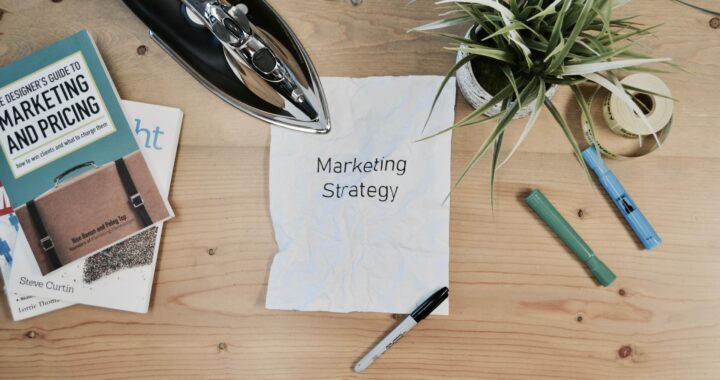
  • Essential Book List: Marketing Advice for Small Business

    Essential Book List: Marketing Advice for Small Business

    Digital marketing evolves by the minute, and there’s always something new to learn. Keep your marketing strategies fresh and up-to-date with this list of some of the best marketing books for 2020.

    Some of these books are straight from the marketing canon and others might be brand new to you. From influencer marketing to content writing tips, this list has the major marketing bases covered.

    Title: The Social Organism: A Radical Understanding of Social Media to Transform Your Business and Life

    Authors: Oliver Luckett and Michael J. Casey

    Helps with: Social media marketing

    Who would have thought that social media marketing and biology could have so much in common? In The Social Organism, Luckett and Casey argue that social networks closely resemble the rules and functions of biological life.

    Memes, for example, look completely different under Luckett and Casey’s microscope: “In sharing and replicating packets of information known as memes, the world’s social media users are facilitating an evolutionary process just like the transfer of genetic information in living things. Memes are the basic building blocks of our culture, our social DNA.”

    This book will forever change your perspective on social media and open your eyes to new ways to harness its power in fruitful ways.

    Title: Everybody Writes: Your Go-To Guide to Creating Ridiculously Good Content

    Author: Ann Handley

    Helps with: Content writing

    Offering straightforward advice and actionable tips, Handley dispels the misconception that good writing can only be mastered by a select few who possess innate talent and skill. “I am a writer. You are a writer. Everybody writes,” argues Handley.

    Book sections include:

    ● How to write better. (Or, for “adult-onset writers”: How to hate writing less.)
    ● Easy grammar and usage rules tailored for business in a fun, memorable way. (Enough to keep you looking sharp, but not too much to overwhelm you.)
    ● Giving your audience the gift of your true story, told well. Empathy and humanity and inspiration are key here, so the book covers that, too.
    ● Best practices for creating credible, trustworthy content steeped in some time-honored rules of solid journalism. Because publishing content and talking directly to your customers is, at its heart, a privilege.
    ● “Things Marketers Write”: The fundamentals of 17 specific kinds of content that marketers are often tasked with crafting.
    ● Content Tools: The sharpest tools you need to get the job done.

    This book is a must-read that will leave you feeling confident in your ability to create great content that will boost your business.

    Title: One Million Followers: How I Built a Massive Social Following in 30 Days

    Author: Brendan Kane

    Helps with: Digital strategy and influencer marketing

    Making a splash in social media’s endless ocean is one thing, but anchoring your brand with a devoted following can be as elusive as the lost city of Atlantis.

    In One Million Followers, Kane will teach you how to gain an authentic, dedicated, and diverse online following from scratch; create personal, unique, and valuable content that will engage your core audience; and build a multi-media brand through platforms like Facebook, Instagram, YouTube, Snapchat, and LinkedIn — all in 30 days or less.

    Title: Building a StoryBrand: Clarify Your Message so Customers Will Listen

    Author: Donald Miller

    Helps with: Brand positioning

    Every great marketing strategy starts with an even better StoryBrand. Miller’s book breaks down the elements of a successful brand like they’re the building blocks of a great story. By describing the story points that all humans respond to, the rationale behind people’s purchasing decisions, and how to simplify your brand messaging, Miller will have you reimagining the story you tell about what you do or what you sell.

    Building a StoryBrand focuses on seven key principles:

    1. The customer is the hero, not your brand.
    2. Companies tend to sell solutions to external problems, but customers buy solutions to internal problems.
    3. Customers aren’t looking for another hero; they’re looking for a guide.
    4. Customers trust a guide who has a plan.
    5. Customers do not take action unless they are challenged to take action.
    6. Every human being is trying to avoid a tragic ending.
    7. Never assume people understand how your brand can change their lives. Tell them.

    Title: Tap: Unlocking the Mobile Economy

    Author: Anindya Ghose

    Helps with: Mobile marketing

    By tapping into the data trail mobile consumers leave behind, businesses can leverage smartphones into smarter companies. “When mobile advertising is done well, the smartphone plays the role of a personal concierge―a butler, not a stalker.”

    Ghose’s international research has uncovered some fascinating insights into the wildly contradictory behaviour of consumers. “People seek spontaneity, but they are predictable; they find advertising annoying, but they fear missing out; they value their privacy, but they increasingly use personal data as currency,” Ghose argues.

    By breaking down complex mobile consumer behaviour into approachable human insights, Ghose makes it easier for businesses to benefit in an increasingly mobile economy.

    When well-executed, marketing tells your customers exactly how you stand out from the competition. The fast-changing world of marketing requires business owners to be forward-thinking, nimble, and well-read. Let this booklist be a launch point for your ongoing study of marketing strategy in all its forms.

    Author: ChamberPlan.ca

    Read the original version of this article.

  • A new approach to work after a life-altering event

    A new approach to work after a life-altering event

    Your life looks more different right now than it ever has.

    Depending on the nature of your work, you are either run ragged trying to keep your business afloat, or you’ve had some time to slow down, take a step back and see life, your life, from a different perspective.

    Our patterns of behavior are ingrained in each one of us; what we do for work is often at the core of our identity. We wear 10-hour work days like a badge of honour; it signifies good work ethic—that we are getting somewhere. We are conditioned to drive to our place of work, sign up our kids for every available sport and artistic endeavor, all the while, stay fit, eat healthy, take care of ourselves and find quality time with loved ones.

    We’ve had some time to step off this crazy track (some of us are now watching the rats run by). We’ve been on a road that is near impossible to see because we are always traveling too fast upon it.

    It feels like a good time to open the mind to different perspectives and shared wisdoms, and ask the question, “Have I been working smart, or the only way I know how?”

    In a recent interview with Tim Ferriss, Michael Lewis asks, “Am I only here to pay my bills? Or are we here to get more out of life?”

    Lewis tells the story of his young self working for Salomon Brothers. After he wrote an op-ed for The Wall Street Journal about investment bankers being overpaid, he got into big trouble with his boss. But, he was also one of the highest revenue generators at the firm at the time, and therefore, un-fireable.

    Listening to people who are inclined to speak their truth gets one asking, “What is my truth?” While Lewis is more than ambitious, and admits he’s competitive, he says he doesn’t accept money as an accurate measure of ambition or success. “I’m not trying to get a lot of [one] thing. If I’m trying to maximize anything, it’s a feeling. [I want to say] ‘that is a great piece of work.’” It’s a great interview and worth a listen. 

    Working hard versus working smart is something we’ve all heard before. Medium contributor, Amanda Warton Jenkins reveals in her post “Don’t Work Harder, or Smarter; commit to these 3 things and watch your life improve” that after her reading of Brendon Burchard’s book High Performance Habits, that “the highest performers don’t grind and hustle like me.” She admits, [her] “ladder was usually against the wrong building.” Meaning, she realized that her “why” for achieving half the things she was working hard to achieve were for the wrong reasons. She states, “Many of my goals were only there because achieving them was about how I looked to others. Achieving them made me look successful, normal, important. But none of them had anything to do with who I really wanted to be.”

    COVID isolation has been a good time to reflect for some business owners and entrepreneurs. It’s a great time to answer some unaddressed and hard questions, like:

    Do I want to grow my business for the right reasons? Does your growth strategy make sense for your business? Or are you positioned for growth because it’s what you think you should do?

    What have I noticed about my business during the pandemic that I have never noticed before now? Is less overhead serving me well? A smaller team?

    How have my customer’s expectations changed? How can I keep this new mindset going?

    Can my business gain insight into new ways of operating? A new process?

    Zat Rana, an online writer who describes himself as “playing at the intersection of philosophy, science and art”, takes the words of philosophers and turns them into modern day messages, applicable to our daily lives. In a more recent article, he says of Nietzsche’s philosophy to not think of knowledge as being separate from power.  He explains, “Think of your body as an expression of truth. More than the warrior or the philosopher, this is why Nietzsche was especially drawn to the archetype of the artist – he/she who creates what they are.”

    There seems like no better time than now to recreate who we are, reinvent aspects of our businesses and question our approach to work.

    Author: ChamberPlan.ca

    Read the original version of this article.

  • Innovative ways businesses keep going during COVID-19

    Innovative ways businesses keep going during COVID-19

    As the saying goes, when life gives you lemons, make lemonade. Montreal distiller Paul Cirka decided to take his own spin on this old adage when life – or more accurately, his supplier – gave him corn. Instead of turning corn into gin, he made hand sanitizer.

    Cirka Distilleries is one of many businesses finding innovative ways to keep the doors open during the COVID-19 pandemic. It’s not an easy task. As the federal and provincial governments take measures to combat the virus, more than a million Canadians lost their jobs in March and by mid-April more than five million people had applied for the Canada Emergency Response Benefit.

    Over the last month, many businesses have been declared non-essential. Many have closed their doors, hopefully temporarily, as they ride out the pandemic. Others have turned to alternative ways to carry on. Restaurants are doing takeout and delivery, for example, and fitness facilities and yoga studios are putting classes online.

    Some businesses have become even more innovative. Fortunately for companies like Cirka Distilleries, COVID-weary Canadians need a drink more than ever and businesses that make and sell alcohol continue to operate. Cirka saw a need even greater than gin and vodka, however, and using a recipe approved by the World Health Organization, the business has joined distilleries around the world to produce much-needed hand sanitizer. Since March, Cirka’s employees have been working around the clock to develop the antiseptic, which requires a much higher form of alcohol than the usual 40 proof Cirka uses to make its vodka and gin.

    Other businesses are also straying from “business as usual”. Bauer Hockey, one of North America’s top producers of hockey equipment, has changed its focus to make another product currently in high demand: masks. Bauer is using hockey visor materials to manufacture full medical face shields, which are meant to protect the wearer from being infected by respiratory droplets that carry the virus. Organizations can request a minimum of 100 face shields directly through Bauer’s website.

    Bauer’s venture into medical face masks is a welcome contribution in a time when frontline workers are in dire need of personal protective equipment…and when employees of businesses deemed non-essential would otherwise be unemployed. The switch from hockey gear to hospital gear is keeping 20 people working in Quebec and another 12 working in New York.

    Peregrine Retail Design Manufacturing’s in Burnaby normally creates elegant front counter designs for high end clients including Lululemon, CIBC and Starbucks. But when many of its clients were forced to temporarily shut their (undoubtedly fancy) doors, work came to a halt and Peregrine had to lay off 30 per cent of its 85 person staff. Seeing a need in the retail sector determined to still be essential – grocery stores, pet stores and (as we determined earlier) liquor stores, Peregrine quickly turned its sights to manufacturing a product slightly less high end but ultimately more critical in keeping retail workers safe – plexiglass shields.

    There’s no word yet on when life will get back to normal. But while the future remains uncertain for many small businesses in this most unprecedented time, one thing we can likely count on is that more business owners will embrace innovation, and find new ways to stay afloat, meet a need and keep their workers working.

    Author: ChamberPlan.ca

    Read the original version of this article.

  • Keeping your business current during COVID-19: Ted Kouri of Edmonton’s Incite shares his pandemic plan

    Keeping your business current during COVID-19: Ted Kouri of Edmonton’s Incite shares his pandemic plan

    Many of us are stewing, stressing, wondering what we are supposed to be doing right now, other than swimming for our lives. Do I need a new business strategy? Should I plan for a major pivot—think up new ways to deliver my services or products? Should I be shutting my doors?

    “Business as usual” seems a proverb of a long-time past—most business owners are navigating a terrain as foreign as the moon right now. “This isn’t like any other time we have ever experienced,” says Ted Kouri of Incite, an Edmonton-based strategy firm with national reach that helps small businesses grow into new markets and build brand loyalty.
    “It feels different than H1N1 or any market crash that has come before because it hit us so fast,” says Ted. “COVID-19 doesn’t discriminate geography or industry, we are all affected, business-wise and personally.”
    Most people agree, this is not the time to be ‘making the sale.’ We asked Ted how he is keeping his business current and an asset to others, and personally navigating this time of uncertainty. Here is what he shared:
    1. Keep your clan in the loop.
    Internal staff communication has looked like the following over the past weeks: Layoffs, down-sizing, uncertainty, and more layoffs. No question, there are lots of scared people. Ted suggests keep all your staff in the loop, whether they are laid off or not. “If your whole team is kept up to date, messaging regarding your business can stay consistent and transparent,” says Ted. “Don’t pretend it’s not difficult when communicating with your team, but don’t let fear rule the day. Be upfront, but positive.”
    2. Repackage your services. Never has “adapt or die” been more true in business, however, according to Ted, “It’s a mistake to totally abandon your strengths right now. Instead, get creative about how to bring your new ideas or service segments to market,” he explains.

    “There might be new needs your clients have never had before.”

    Ted also advises, make short term pivots that have long-term value. “Don’t give your services or products away for free, but repackage them. A different version of your core services might be a four-week offering vs. a five-month plan.” For restaurants and grocery stores, it’s curb-side pick-up. For the beauty industry, it’s using training technologies such as YouCam A.R.T. to stay connected with clients and have them “try-on” new products. Fashion and retail industries are using new app, Streetify to give clientele a virtual shopping experience.
    3. Make a game plan. “Back to normal” seems elusive right now. No one knows when that will be; however, having a game plan—a vision for what “later” could look like—can put the mind at ease.
    “Businesses need to think about market share that could be gained when businesses are up and running again,” explains Ted. For Incite, 3, 6, and 9-month contingency plans have given them a path forward, some options when it feels like there are none. “A contingency plan doesn’t have to be complicated,” says Ted. “Just a one-pager laying out some avenues to take once we have past certain gates.”
    Ted believes brands that go dark—those who don’t have external communication while they are temporarily closed—will have a harder time to hit the ground running when it’s time. “Decide how you can maintain relevance with your clients and stakeholders right now, and make an authentic connection.”

    “The small businesses that choose to show up for their clients now will do better in the long term.”

    4. Decide your personal mindset. “One of my favourite business pieces is Dan Sullivan’s ‘Scary Times Success Manual: How to be a leader when times get tough.’” How we decide to show up right now matters. A lot. “People admire those who can stay positive, shed light or solution on a situation.

    “There has been no better time to show personal leadership and be of value to others than now.”

    It may be hard to believe at the moment, but there’s a chance that this crazy time is an opportunity for businesses to get better at what they do. “What’s important is to focus on what is not different,” says Ted. When we are forced to downsize, get creative, save money in order to survive, we quickly see the holes in the way we operate. “There is opportunity that will come from this time. The trick will be to have your running shoes tied on the start line when the sun comes out, and all this is over.”
  • Your Business Website Content Review: How to get started and what to consider

    Your Business Website Content Review: How to get started and what to consider

    If your business brochure went to print with two or three spelling mistakes, you would probably reprint to save yourself the embarrassment. However, we tend not to take digital publishing polish as seriously. We all stumble upon web pages and blog posts with typos and broken links daily.

    A content review, or “audit”, is a great way of improving your business website performance. Reasons to perform an audit on an annual basis, include updating new board members, news you keep on your site or awards you might be celebrating. Also renewing your events calendar, new services, pricing, or portfolio pieces to show off your work…And, of course, to make sure all spelling and grammar is sound. It’s also a chance to find out where most or your users are spending their time on your website, and make some valuable changes.

    Wondering where to begin?

    Start by creating your webpage inventory

    Most content strategy companies suggest beginning a content review with a webpage inventory, to ensure no corner of your website is neglected or forgotten. Webstruxture , a solutions-based web applications designer, suggests using an Excel spreadsheet to create a map. Columns might include:

    • Name of the web page
    • URL
    • Content Owner
    • Date the content was reviewed
    • Date it was approved
    • Next review date

    Webstruxture also recommends project management program, Asana, to help stay on top of your content review plan and create a manageable schedule.

    Assign Roles and Responsibilities

    Like any internal project, making sure your team is clear on who “owns” what task and responsibility sets them up for success. GatherContent , a platform on which a team can plan and organize content at any scale, suggests getting the following people involved:

    • Subject Matter Expert (SME)
    • Editor
    • Copywriter
    • Marketing Manager

    Wondering where you are going to fit this into your tight schedule? A content review doesn’t have to be finished in a day. Break it off into bite-size chunks and give your team a reasonable deadline.

    Create a content review housekeeping list (But don’t be afraid to think outside its parameters!)

    There are obvious things to look for in a content review, such as bad spelling and grammar, but there are many steps to testing your site. A thorough check-list used by web strategist and designer, Intechnic includes the following:

    • Click on all links to make sure they are still working
    • Fact-check to ensure accuracy of the information on your site
    • Assess white space: is the page too content heavy? Do you need more images?
    • Evaluate the validity of the existing content. Does it still accurately depict the services or products you are offering. Is the message aligned with your brand, your core values?
    • Check load time of each page
    • Check for inconsistent formatting
    • Ensure all meta-tags and page titles are in place

    Invite a third-party to help you review

    Some of the most important questions you might ask when performing a website content review is:

    “Am I satisfying the needs of my user? Are they finding the information they came to find?” How do I know my content is engaging?

    Expertise can make it hard to know what people don’t know. A third-party content writer or strategist is a great resource to have on board to offer an outsider’s perspective and address some questions that might be essential to improving your user experience.

    Evaluate your analytics

    Knowing where your users are spending most of their time on your website can also inform your content review. If there are pages that are getting no traffic, maybe that content can be archived, or the right search terms do not appear in headings, subheadings, and body of the content.

    What can be gained?

    The outcome of a content review can be very rewarding and might lead to your renewing customer and potential client engagement, a renewed confidence in your business message, and turning more site visits into leads and conversions.

    A first content review might seem like a mountain of work, however, once you have an inventory in place and assign roles, it gets simpler with every calendar year. Whether your content review is part of a content strategy for a new website or an annual review of your existing site, it’s always worth spending time improving one of your business’ greatest assets.

    Author: ChamberPlan.ca

    Read the original version of this article.

  • Is This the Year You Learn How to Meditate?

    Is This the Year You Learn How to Meditate?

    Dating back to ancient times, meditation has been used to facilitate mindfulness, awareness, enlightenment, and reflection. And now, researchers are looking at how the practice of meditation affects our mental and physical health, and even how it changes the brain .

    What was once considered a mystical exercise in mastery of the mind, meditation is everywhere with many companies like Google and General Mills encouraging employees to incorporate it into their daily routines. Despite its ubiquity, it can still be intimidating to jump headfirst into the practice of mindfulness.

    How does it work? Where do I start? Do I need to bring a yoga mat to the office?? Relax, take a deep breath, and read on to learn how the practice of meditation can make you work better. You’ll be optimizing productivity and improving focus in no time!

    Benefits of Meditation for Leaders and Team

    The founder of the mindfulness curriculum at General Mills, Janice Marturano, went on to start the Institute for Mindful Leadership — a non-profit training institute that offers retreats and workshops to teach employees how mindful practice can build resilience, increase creativity and focus, and help foster compassion.

    Marturano studied over 100 participants of a seven-week mindfulness workshop from 2008 to 2010. She asked them to reflect on how mindful practice was manifesting in their daily routines and what benefits they had noticed. Marturano found that 83% of participants were carving out time each day to think about ways to optimize their personal productivity, and 82% were eliminating tasks of limited value. On average, eight out of ten noticed improvements in decision-making and nearly 90% reported that they had become better listeners.

    As researchers continue to evaluate the effects of meditation practice on our bodies and behaviour, the evidence is stacking up in its favour. Much like aerobic exercise improves the cardiovascular system, meditation trains and tones the mind to function more effectively. According to Healthline.com these are a few other known health benefits of meditation:

    – Reduced stress & anxiety

    – Improved emotional health

    – Enhanced self-awareness

    – Lengthened attention span

    – Delayed age-related memory loss

    – Greater kindness to self and others

    – Improved sleep

    – Pain control

    Which Type of Meditation Works Best?

    A quick Google search and you’ll find that there are anywhere from six to 23 different types of meditation out there. Where do you even start?

    While you won’t likely start out of the gate with a handle on all 23 techniques, varying your practice with different styles of meditation will give you a well-rounded practice. You’ll soon discover which methods work best for you and how different situations or challenges may require different techniques to help guide you through. Here are five types of meditation to get you started:

    1. Mindfulness Meditation – Start by being fully present with your thoughts and aware of where you are and what you are doing. Typically using a focus on breath to anchor the practice, you observe thoughts and emotions as they come, but release them without judgement.
    2. Transcendental Meditation – Using a personally assigned mantra such as a word, phrase or sound that is repeated in a specific way for 20 minutes twice daily, this technique is meant to inspire deep inner peace, relaxation, and rest.
    3. Guided Meditation – To help achieve a fully relaxed state, a guide will lead you through a series of mental pictures and visualization using smell, sound, and texture to create a sense of calm and peacefulness.
    4. Vipassana Meditation – This ancient Indian form of meditation aims to create self-transformation through self-observation. By developing a strong awareness of physical sensation in the body, the connection between body and mind is strengthened.
    5. Metta (Loving Kindness) Meditation – As the name suggests, this practice focuses on directing goodwill towards oneself and others through the repetition of the following phrases: “May I be happy. May I be well. May I be safe. May I be peaceful and at ease.” The practice continues as you visualize someone else and repeat the mantra, replacing the “I” with “you.”

    Taking Meditation to Work

    Interested in using mindfulness and meditation to help boost engagement and innovation for your team? From online seminars to corporate meditation workshops, there are plenty of ways to bring the practice of mindfulness to the office.

    Mindset Brain Gym in Toronto offers drop-in classes, multi-week courses, and customized corporate mindfulness training sessions. With a focus on clinical mindfulness techniques, positive psychology, and neuroscience, Mindset has been helping companies like Uber, Holt Renfrew, and BMO bring mindfulness to the workplace.

    Vancouver’s Salt & Spirit Wellness creates customized programs, workshops, and retreats ranging from four to 12 weeks in length. Meditation programs focus on stress management and fostering greater focus, connection, and clarity. They also offer corporate rates for companies so that employees can enjoy unlimited meditation, wellness, and fitness classes at Salt & Spirit.

    MindWell-U delivers the popular Mindfulness Challenge — a 30-day online training program that delivers a meditation curriculum using short videos, podcasts, emails and text messages for 5-10 minutes each day. This delivery style makes it easier for employees to find time during their busy day to attend to self-care and mindfulness.

    It’s never been easier, or more encouraged, to adopt meditation practices as part of an overall approach to mind and body wellness. Let this be the year you make more time for you. You’ll thank yourself for it later.

    Author: ChamberPlan.ca

    Read the original version of this article.